Gold, and Then Gone
Days after Ben Johnson won the Seoul 100 metres in world-record time, a failed drug test stripped the gold — turning a national triumph into a reckoning.
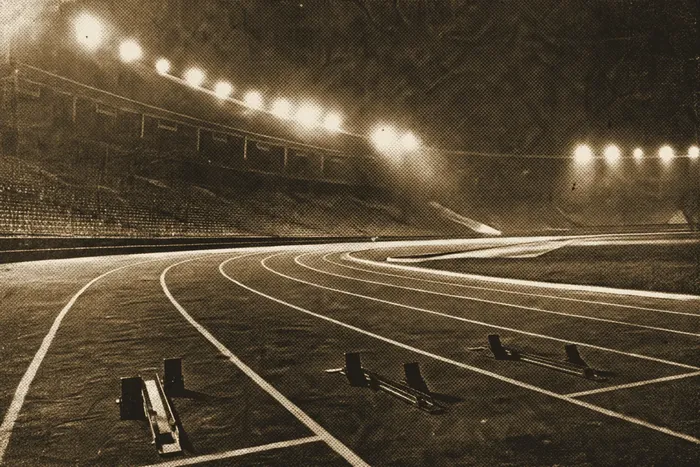
On September 24, 1988, at the Summer Olympics in Seoul, Canadian sprinter Ben Johnson won the men’s 100-metre final in a world-record time. It was a moment of extraordinary national pride. Johnson had defeated a field that included the finest sprinters in the world, and Canada celebrated a champion in the most watched event of the Games. For a brief span of days, his victory stood as one of the country’s greatest athletic achievements.
Within days, the celebration collapsed. Johnson tested positive for a banned substance, and on September 27 he was stripped of the gold medal. The reversal was swift and complete, and the news travelled around the world. What had been a story of triumph became, almost overnight, a story of disgrace, and Canada found itself confronting a public reckoning it had not anticipated.
From Celebration to Reckoning
For Canadian newspapers, the days between the two events represented one of the sharpest turns imaginable in the coverage of a single figure. Front pages that had carried images of victory now carried the news of the medal’s loss. The headline announcing that Johnson had been stripped of his gold marked one of the most difficult moments in the country’s sporting history, and the papers had to report it plainly, without softening the fact.
The reporting extended well beyond the result. The case raised immediate and uncomfortable questions about the use of performance-enhancing drugs in sport, questions that could not be confined to a single athlete. Canadian front pages became the venue in which the country began to absorb what had happened, moving from the shock of the announcement toward a broader and more sober examination of the practices that lay behind it.
That examination took formal shape in the Dubin Inquiry, a public investigation into the use of drugs and banned practices in sport. The inquiry became a landmark, its findings reaching far beyond the case that had prompted it and shaping conversations about integrity in athletics for years to come. The front pages of late September 1988 marked the beginning of that longer process, the first record of a story whose consequences would unfold over months and beyond.
The events in Seoul remain a difficult chapter in Canadian sport, remembered not for a single verdict on one athlete but for the wider questions they forced into the open. The speed with which national pride turned to national soul-searching gave the episode a lasting weight, and the newspapers of the day carried the burden of reporting both the height and the fall.
The archive includes this front page because it captures a moment when a country was asked to understand something it would rather not have faced. The headline is stark, and it was meant to be. To read it now is to see how a front page can record not only what a nation celebrated but what it was forced to confront, the morning a triumph became a reckoning that would outlast the Games themselves.
About this front page
Questions & answersWhich newspaper front page is reconstructed here, and on what date?
It reconstructs the Final Edition of the Toronto Star, published in Toronto on 27 September 1988. That was the day the paper reported that sprinter Ben Johnson had been stripped of his Olympic gold medal in Seoul.
What happened to Ben Johnson at the 1988 Seoul Olympics?
On 24 September 1988, Johnson won the men's 100-metre final in a world-record time, defeating a field of the world's finest sprinters. Within days the celebration collapsed: he tested positive for a banned substance, and on 27 September he was stripped of the gold medal, turning a story of triumph into one of disgrace.
What broader reckoning followed the case?
The reporting extended beyond the result to uncomfortable questions about performance-enhancing drugs in sport. That examination took formal shape in the Dubin Inquiry, a public investigation into the use of drugs and banned practices in sport, whose findings reached far beyond the case and shaped conversations about integrity in athletics for years.
Does this entry reproduce a scan of the original newspaper?
No. It is an original typographic reconstruction of the front page, rebuilding the masthead, banner headline and dateline. It is not a scan of the copyrighted printed page, but a reconstructed plate that preserves the stark headline as it appeared the morning a triumph became a reckoning.