The Clerk Who Started the Cold War
When the story of a defecting embassy clerk broke, the front pages revealed a spy network on Canadian soil and announced a new, colder era.
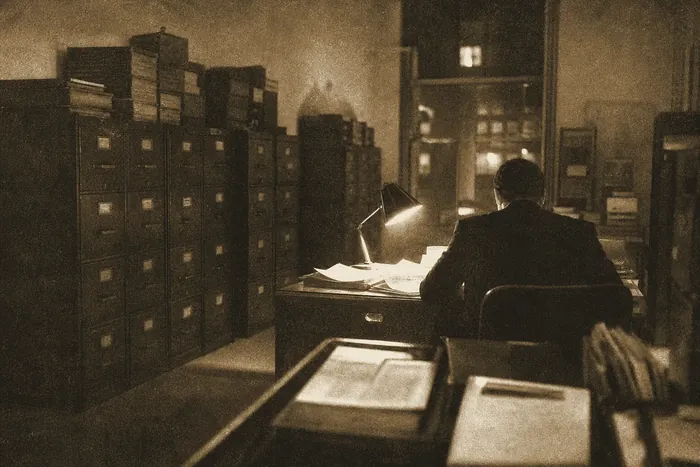
In February 1946, the front pages carried a story that had, until then, been held quietly out of public view: that a cipher clerk at the Soviet embassy in Ottawa had defected months earlier with documents describing a network of espionage operating in the West. The revelation caused an immediate sensation, and it is often cited as one of the opening episodes of the Cold War — a conflict that had not yet been named when the news broke, but whose shape the story helped reveal.
The clerk, Igor Gouzenko, had left the embassy in September 1945 carrying material that pointed to Soviet efforts to gather intelligence, including on matters of the greatest sensitivity in the aftermath of the Second World War. What followed in the months before the public disclosure was a period of secrecy and official caution, as authorities weighed how to act on information that implicated a wartime ally. When the affair finally reached the newspapers, readers encountered a reality that ran against the mood of alliance so recently celebrated.
A Wartime Ally Reconsidered
For the press, the story was difficult and consequential in equal measure. The Soviet Union had, only months before, been a partner in the defeat of Nazi Germany, and the public understanding of the world was still organized around that alliance. To report a Soviet spy ring on Canadian soil was to ask readers to revise a recently settled picture — to accept that the lines of trust had shifted, and that the country stood on one side of a division whose consequences were only beginning to appear.
The front pages thus did more than relay facts; they participated in a reorientation. Coverage of the affair, and of the official inquiry that followed, brought terms like espionage and security into ordinary public discussion in a new way. Canada, a country not accustomed to standing at the centre of great-power intrigue, found itself the setting for a story of international significance.
The archive includes this page because it marks a hinge between two eras. On one side lay the wartime coalition; on the other, the long standoff that would define international affairs for decades. That so pivotal a shift should surface first in Ottawa, through the actions of a single clerk, gives the story an almost improbable specificity — a global transformation traceable to documents carried out of one embassy.
Historians continue to debate the exact weight of the affair in the larger origins of the Cold War, and the picture is more layered than any single headline could convey. What the front page preserves is not the settled historical judgment but the moment of first public shock: the day readers were told that the peace they had won contained a new and unfamiliar antagonism.
Read now, the page is a document of a country waking to a changed world. It reported a spy ring; what it announced, in effect, was the end of one understanding of the postwar order and the arrival of another. To open the paper that day was to be asked to see an ally as an adversary — and that is among the hardest and most consequential things a front page can ever ask its readers to do.
About this front page
Questions & answersWhich newspaper does this entry reconstruct, and for what date?
It reconstructs the Final Edition of The Ottawa Citizen for 16 February 1946, when the front pages carried a story that had until then been held quietly out of public view. The report concerned a defecting Soviet embassy clerk and a spy network operating in the West.
Who was Igor Gouzenko and what did he do?
Igor Gouzenko was a cipher clerk at the Soviet embassy in Ottawa who defected in September 1945, carrying documents describing a network of espionage operating in the West. The material pointed to Soviet efforts to gather intelligence, including on matters of the greatest sensitivity in the aftermath of the Second World War.
Why was this story so difficult and significant for the press?
Only months before, the Soviet Union had been a partner in the defeat of Nazi Germany, and public understanding was still organised around that alliance. Reporting a Soviet spy ring on Canadian soil asked readers to revise a settled picture. The affair is often cited as one of the opening episodes of the Cold War.
Does the archive show the original 1946 Citizen page itself?
No. What is shown is an original typographic reconstruction of the front page, rebuilding the masthead, banner headline and dateline. It is a designed recreation of how the news appeared, not a scan of the copyrighted printed edition.