The Games Come to Canada
As the Olympic flame reached Montreal for the first Games on Canadian soil, the front pages caught a mix of ceremony, ambition, and looming expense.
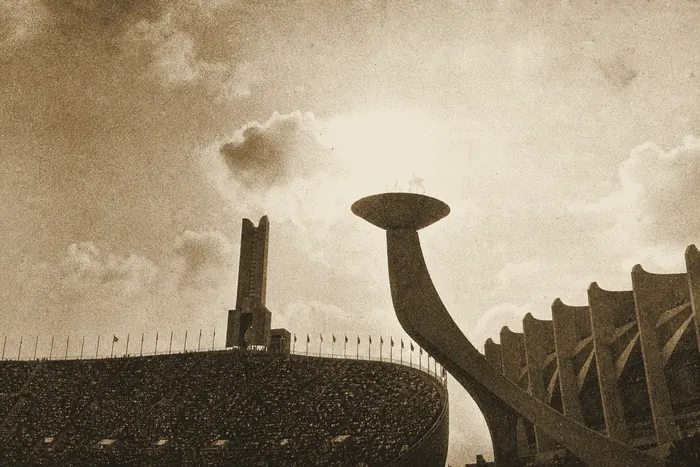
On July 17, 1976, the Summer Olympic Games opened in Montreal, the first Olympics ever held in Canada. The morning’s front pages presented a city taking its place on the world’s largest sporting stage, less than a decade after it had hosted the World’s Fair. For Montreal, and for the country, the Games were an assertion of capability — proof that Canada could stage an event watched by much of the planet.
The opening set the tone for weeks of competition to come, and the coverage carried the familiar apparatus of an Olympic host: the ceremony, the arriving athletes, the sense of a global gathering assembled in one place. Newspapers had to convey both the spectacle and its significance, framing the Games as an achievement while acknowledging the scrutiny that came with hosting. The eyes of the world, having turned briefly toward Montreal, would judge the city on its performance as host.
Triumph and Its Costs
The competition itself produced moments that outlasted the summer. The Romanian gymnast Nadia Comaneci became the enduring image of these Games, earning perfect scores of a kind the sport’s scoreboards had not been built to display. Her performances gave the Montreal Olympics an athletic centrepiece that would be recalled long after most results had faded, and the front pages of the period reflected the wonder she generated.
Yet the Games carried a second story that grew heavier with time: the cost of staging them. The venues, and the Olympic Stadium in particular — later nicknamed “the Big O” — became associated with substantial overruns, and the financial burden lingered for many years after the closing ceremony. The stadium, unfinished in some respects when the Games began, became a lasting symbol of the gap between Olympic ambition and Olympic expense. Coverage during and after the Games increasingly held these two threads together: the pride of hosting and the price of it.
The archive includes this page because it captures an event whose meaning was double from the start. The front page announcing the opening spoke to a moment of national confidence, but it also stood at the beginning of a longer public reckoning about what such events demand of the cities that host them. To read the coverage across the arc of the Games is to watch celebration and caution coexisting.
For Canada, the Montreal Olympics remain a complex memory. There is genuine pride in having hosted the world, and there are images — Comaneci foremost among them — that belong to the country’s sense of the era. There is also the sober lesson of the stadium, invoked for decades afterward whenever the costs of major public undertakings are weighed. The front page preserves the moment before that fuller judgment had formed, when the emphasis was still on arrival and ceremony.
Read today, the page is a document of a country stepping onto a global stage and inviting the world’s attention. It reported the opening of the Games; what it recorded was the beginning of a story Canadians would tell in more than one register — as achievement, as spectacle, and, in time, as caution. That is what such a front page can hold: the confident first morning of an event whose full meaning only later years would supply.
About this front page
Questions & answersWhich newspaper front page opens the 1976 Montreal Olympics, and when was it published?
The archive reconstructs the Morning Edition of The Gazette of Montreal, dated 17 July 1976. It presented a city taking its place on the world's largest sporting stage as the Summer Olympic Games opened, the first Olympics ever held in Canada.
What made the Montreal Games significant beyond being a sporting event?
They were the first Olympics held on Canadian soil, coming less than a decade after Montreal had hosted the World's Fair. For the city and the country, the Games were an assertion of capability, proof that Canada could stage an event watched by much of the planet.
What athletic moment and what lasting problem defined the Games?
The Romanian gymnast Nadia Comaneci became the enduring image of the Games, earning perfect scores the sport's scoreboards had not been built to display. Yet the venues, particularly the Olympic Stadium later nicknamed "the Big O", became associated with substantial overruns, and the financial burden lingered for many years.
Is this a scan of the newspaper as it appeared in 1976?
No. It is an original typographic reconstruction of the front page, rebuilding the masthead, banner headline and dateline in type rather than reproducing a scan of the copyrighted printed page. It preserves the confident first morning of the Games as readers met it.