Black Friday for the Arrow
The morning Canada learned its most advanced aircraft was finished, and that thousands of the engineers who built it had lost their work in a single day.
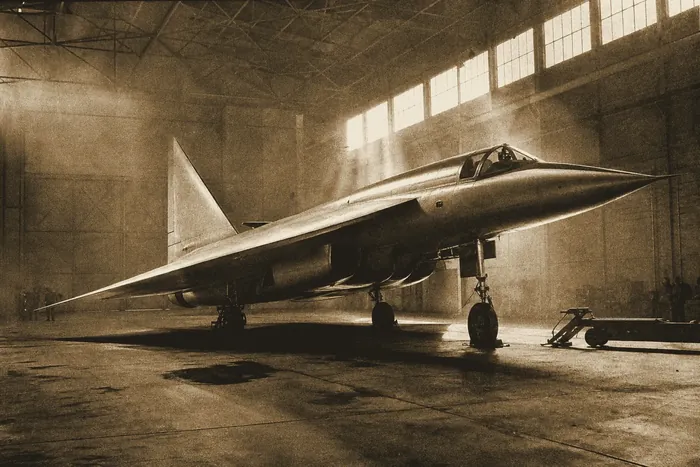
On the morning of February 20, 1959, Canadian readers opened their newspapers to the end of an aircraft that had come to stand for national ambition. The government of Prime Minister John Diefenbaker had cancelled the Avro CF-105 Arrow, the advanced supersonic interceptor built at Malton, Ontario, and with it the vast enterprise that had grown up around the programme. The date entered the country’s memory as “Black Friday.”
The Arrow was not an ordinary defence contract. It was a delta-winged interceptor designed to fly higher and faster than almost anything then in the air, conceived and manufactured in Canada by Canadian engineers. For a young industrial nation, it represented proof that the country could build at the frontier of aviation rather than buy from allies. When the programme ended, that proof ended with it, and the front pages had to convey both a policy decision and the collapse of a symbol.
A day of dismissals
The most immediate story was human. Thousands of employees at A.V. Roe Canada and its suppliers were dismissed on the same day, their work stopped mid-stride. Front pages reported the scale of the layoffs alongside the government’s reasoning, which turned on soaring costs, shifting defence doctrine, and the argument that guided missiles had overtaken the manned interceptor. Editors placed the numbers and the justification side by side, leaving readers to weigh a fiscal case against a sudden loss of livelihoods.
What followed deepened the sense of finality. The completed aircraft, along with the tooling used to make them, were ordered destroyed, and the physical evidence of the programme was largely dismantled. That decision, more than the cancellation itself, gave the episode its lasting bitterness, and it has been argued over ever since. Reporting in the following days recorded the disbelief of workers and engineers who had watched the Arrow fly and now watched it disappear.
The longer consequence was a departure. Many of the programme’s engineers, among the most capable in the country, left to find work elsewhere, and a significant number went to the United States, including to the American space effort that would become NASA. The phrase “brain drain” attached itself to the Arrow’s end, describing a transfer of talent that Canada had trained and then let go. Newspapers followed these men out the door, tracing where the expertise went.
For all the technical detail involved, the front pages of February 20 framed the story in plain terms a general readership could grasp: a machine the country was proud of had been cancelled, and the people who made it were out of work. That combination of pride and loss is why the day is remembered when many larger defence decisions are forgotten.
The Arrow’s cancellation remains one of the most debated moments in Canadian industrial history, revisited by historians, filmmakers, and politicians across generations. Much of that debate begins with what people read that morning. The front page did not settle whether the decision was right; it recorded the moment a country was told that a chapter of its ambition was over, and it preserved the shock of a nation waking to find that the future it had been building had been called off overnight.
About this front page
Questions & answersWhich newspaper front page is reconstructed here, and on what date?
It reconstructs the Final Edition of The Globe and Mail, published in Toronto on 20 February 1959. That was the morning Canadian readers learned that the government had cancelled the Avro CF-105 Arrow, a date that entered the country's memory as "Black Friday."
What was the Avro Arrow, and what happened to it?
The Avro CF-105 Arrow was an advanced delta-winged supersonic interceptor built at Malton, Ontario, designed and manufactured in Canada by Canadian engineers. The government of Prime Minister John Diefenbaker cancelled the programme, and the completed aircraft, along with the tooling used to make them, were ordered destroyed.
What was the human and long-term impact of the cancellation?
Thousands of employees at A.V. Roe Canada and its suppliers were dismissed on the same day. The government cited soaring costs, shifting defence doctrine and the rise of guided missiles. Many of the programme's engineers later left, a significant number going to the United States including the American space effort that became NASA, giving rise to the phrase "brain drain."
Does the archive show the actual printed newspaper page?
No. The archive presents an original typographic reconstruction of the front page, rebuilding the masthead, banner headline and dateline. It is not a scan of the copyrighted printed page, but a reconstructed plate preserving how the news of the cancellation and dismissals appeared that morning.