The Beatles Land
The summer the screaming reached Canada — and the front pages tried, and failed, to explain it to the parents reading over breakfast.
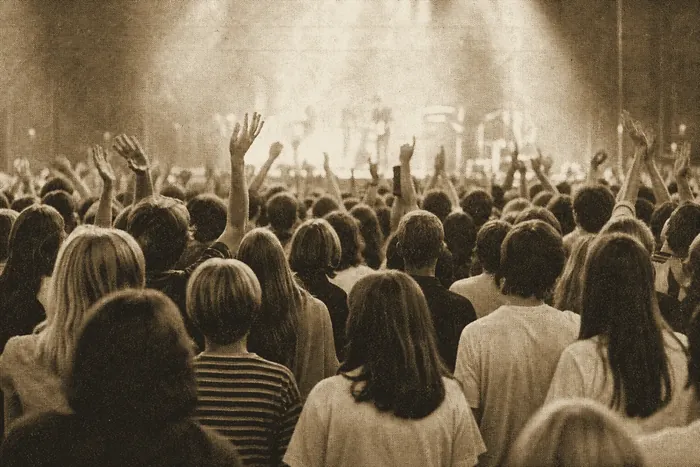
When the Beatles arrived in Canada in the summer of 1964, the front pages faced a problem they were not built for: how to report a feeling. The facts were straightforward — flights, motorcades, sold-out arenas, thousands of teenagers behind barricades. The story was the noise, and noise does not set easily in newspaper type.
Editors reached for the tools they had. Photographs of crowds ran large. Reporters counted things — the decibels, the fainting spells treated by first-aid crews, the minutes it took for tickets to sell out. Columnists, mostly older than the fans, wrote with a mixture of bemusement and alarm that now reads as its own period document. The front page became a meeting point between the generation making the news and the generation editing it.
For a cultural archive, the Beatles coverage is valuable precisely because it is imperfect. The papers did not quite know what they were describing, and their uncertainty is preserved in the layout: a serious masthead, a civic front page, and in the middle of it a phenomenon that refused to behave like civic news. Within a few years the same papers would build entire entertainment sections to handle exactly this kind of story.
There was also a geography to the coverage. The tour touched only a few Canadian cities, but the front pages carried it everywhere, so that a teenager in a town the band would never visit could still wake up to the same headline as a fan who had stood behind the barricades. That is one of the quieter powers of the front page: it lets a whole country attend an event that only a fraction of it could physically reach. For a few August mornings in 1964, the entire country was, in effect, in the arena.
This front page marks the hinge. It is the morning a Canadian daily treated pop music as page-one news — and in doing so, quietly changed what a front page was allowed to be about.
About this front page
Questions & answersWhich newspaper front page does this entry reconstruct, and when?
It reconstructs the City Edition of the Toronto Daily Star, published in Toronto on 19 August 1964. The page marks the morning a Canadian daily treated the Beatles' arrival, and pop music, as page-one news.
Why did the front pages struggle to report the Beatles' arrival?
The facts were straightforward, flights, motorcades, sold-out arenas and thousands of teenagers behind barricades, but the story was the noise, and noise does not set easily in newspaper type. The papers faced a problem they were not built for: how to report a feeling.
How did editors approach the coverage, and why is it valuable to a cultural archive?
Editors ran large crowd photographs and counted things, the decibels, the fainting spells and the minutes it took tickets to sell out, while columnists wrote with bemusement and alarm. The coverage is valuable precisely because it is imperfect; the papers did not quite know what they were describing, and that uncertainty is preserved in the layout.
Is this page a scan of the original Toronto Daily Star?
No. It is an original typographic reconstruction of the front page, rebuilding the masthead, banner headline and dateline. It is not a scan of the copyrighted printed page, but a reconstructed plate that reproduces how the paper presented the story on those August mornings in 1964.