A Nation Tunes In
On a summer night in 2016, a rock band played its last concert in its hometown, and much of the country stopped to watch a shared goodbye unfold.
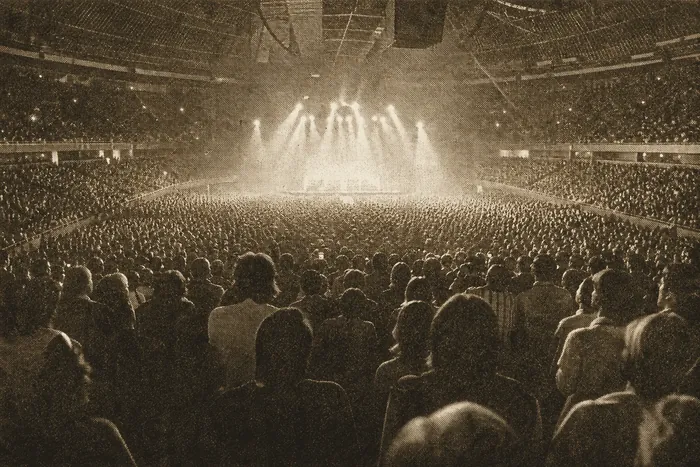
On the night of August 20, 2016, The Tragically Hip played the final concert of their farewell tour in Kingston, Ontario, the city where the band had formed decades earlier. The following day, Kingston’s newspaper carried the story of a homecoming that had become a national event. The occasion was inseparable from its circumstances: the band’s frontman, Gord Downie, was living with terminal brain cancer, and everyone in the room, and far beyond it, understood that this was almost certainly the last time the group would perform together.
What might have remained a regional concert became something much larger when the national public broadcaster carried the show live, without commercial interruption, to audiences across the country. Millions of Canadians watched — in living rooms, in bars, in public squares set up with screens — turning a single evening into one of the rare moments when a large share of the country was attending to the same thing at the same time. For a band long regarded as distinctly Canadian in its songwriting and its following, the scale of the audience was a fitting close.
A Shared Evening
The front-page coverage the next morning faced the task of describing an event that was as much felt as observed. The reporting had to hold together several things at once: the music itself, the visible frailty and resolve of a performer saying goodbye, and the unusual sense of a country gathered around a broadcast. In Kingston especially, the story was personal — a local band that had grown into a national institution, returning home for a final performance in front of neighbours and the nation alike.
Part of what gave the evening its weight was Downie’s own conduct on stage, and the way he used the platform in the time that remained to him, including remarks that drew attention to the circumstances of Indigenous people in Canada. The concert thus carried more than nostalgia; it became a moment when a beloved public figure chose to direct the country’s attention outward. Newspapers registered this too, treating the night not only as a farewell but as a statement.
The archive includes this page because it records one of the increasingly uncommon occasions when a cultural event drew a genuinely collective audience. In an era of fragmented attention, the shared broadcast of a single concert stood out precisely because it was shared. The front page the next day was, in effect, confirming to readers that they had not watched alone — that the feeling in their own homes had been mirrored across the country.
Downie died the following year, and in the time since, the concert has taken on the character of a national memory: a specific date many Canadians can still place themselves within. The front page preserves the immediacy of the morning after, before the event settled into remembrance, when the loss was anticipated but not yet complete.
Read now, the page is a document of a country pausing together. It reported a concert, but what it truly recorded was a moment of common feeling — the sense that a farewell belonging to one band, one family, one city had, for a single night, belonged to everyone. That is among the things a front page can hold: the shape of an evening the whole country agreed to share.
About this front page
Questions & answersWhich newspaper front page covered The Tragically Hip's farewell concert, and when?
The plate reconstructs the front page of The Kingston Whig-Standard of Kingston, in its Final Edition, dated 21 August 2016. It carried the story of the band's final concert, played the night before in Kingston, the city where the group had formed decades earlier.
What made the Tragically Hip's final concert a national event?
The band's frontman, Gord Downie, was living with terminal brain cancer, and everyone understood it was almost certainly the last time the group would perform together. When the national public broadcaster carried the show live without commercial interruption, millions of Canadians watched in living rooms, bars and public squares, turning a single evening into a shared national moment.
What did Gord Downie draw attention to during the concert?
Part of what gave the evening its weight was Downie's conduct on stage and how he used the platform in the time that remained to him, including remarks that drew attention to the circumstances of Indigenous people in Canada. The concert became more than nostalgia; it was a moment when a beloved public figure chose to direct the country's attention outward.
Is this a scan of the actual 2016 Whig-Standard front page?
No. The page is an original typographic reconstruction of the front page, rebuilding the masthead, banner headline and dateline. It represents how the morning-after coverage was set out rather than reproducing a scan of the copyrighted printed page.